
The US Invasion of Venezuela and the US-China Contest for Hegemony
- Joonseok
- 등록 2026.02.16 11:06
- 조회수 1,769
Clashes between great powers are growing ever more brazen, and war and mass killing are seeping ever deeper into people's daily lives around the world. One Korean scholar of international politics put it this way: "The era of elegant hypocrisy has passed, and the era of honest barbarism has arrived." A clear working-class perspective is more critical now than ever. Where exactly is the world heading? What tasks confront the working class and the oppressed?
Joonseok / Jan 31, 2026

Table of Contents
1. The US Invasion of Venezuela and Subsequent Events
2. The Fundamental Nature and Current State of the US-China Hegemonic Rivalry
3. The Trump Administration's Strategy for the US-China Hegemonic Rivalry and the Invasion of Venezuela
4. Where Is the US-China Hegemonic Rivalry Heading?
5. Directions for Action and Tasks Ahead
When Russia and NATO plunged into a dead-end proxy war in Ukraine in February 2022, world capitalism once again entered an "era of crisis, war, and revolution". Since October 2023, Israel has carried out genocide against the Palestinian people in Gaza while spreading war across the Middle East. Since January 2025, Trump has plundered the world behind a wall of tariffs, driven major American cities into a state of de facto martial law, and wielded the power of the world's foremost imperialist state recklessly.
Over the past four years, the "norms" that upheld the international order since the collapse of the Soviet Union in 1991, or even since the end of World War II in 1945, have been shattered one by one, dragging the world into ever deeper chaos. Clashes between great powers play out more and more openly, and war and atrocity push further and further into everyday life around the globe. As the Korean scholar put it: the age of elegant hypocrisy has given way to honest barbarism.
Yet the events that unfolded worldwide over January 2026, beginning with the US invasion of Venezuela, have shaken the existing international order more profoundly than anything before, plunging countless people into shock and confusion.
Those who placed their hopes in the so-called "rules-based international order" centered on the United States, or in the "multi-polar system" supposedly ushered in by China and Russia, now find themselves gripped by confusion, helplessness, and anguish.
A volatile international order inevitably has a profound impact on the lives of countless people worldwide, ourselves included. This makes it more important than ever to establish a clear working-class perspective. Where exactly is the world heading now? What tasks does this pose for the working class and the oppressed?
1. The US Invasion of Venezuela and Subsequent Events
From the very beginning of his first term in 2017, Trump repeatedly and openly revealed both his greed for Venezuelan oil and his willingness to invade, declaring: "They have a tremendous amount of oil." In 2020, the US Department of Justice indicted Venezuelan President Maduro and government officials on charges of "narco-terrorism."
Immediately after beginning his second term in January 2025, Trump declared a "war on narco-terrorism" and signed an executive order designating drug cartels as terrorist organizations. In July, he ordered the Department of Defense to launch attacks on drug cartels, and from August onward, large-scale US forces were deployed to the Caribbean near Venezuela. On September 2, a speedboat carrying 11 people was bombed on the claim it was a drug transport vessel, killing everyone on board. Between then and December, at least 105 people were killed in similar fashion by the US military in the Caribbean.
On November 11, a US aircraft carrier strike group was deployed to the Caribbean. On December 10 and 20, two oil tankers were seized by the US military in waters near Venezuela. On December 16, the US designated the Maduro government as a "foreign terrorist organization."
1) The US Invasion of Venezuela
At 10:46 PM on January 2, 2026 (US Eastern Time; 11:46 PM Venezuelan time), Trump ordered the invasion. Over 150 aircraft were deployed, including bombers, fighters, reconnaissance planes, and helicopters. High-powered electronic jamming disabled Venezuela's Russian- and Chinese-made air defense systems, while cyberattacks on the power grid triggered massive blackouts. Claims also emerged that the US military deployed advanced microwave weapons.
At 2:00 AM on the 3rd, roughly two hours into the operation, US forces neutralized the Cuban security detail and seized Venezuelan President Maduro and his wife Flores, transporting them to the US mainland. At least 80 Venezuelan soldiers and civilians were killed. Even after the operation concluded, US forces did not withdraw from the Caribbean. To this day, the US military maintains some 15,000 troops in the Caribbean and continues its naval blockade of Venezuela.
This invasion and abduction of President Maduro closely resembles the 1989 invasion of Panama and capture of strongman Noriega, as well as the 2020 assassination of Iranian Revolutionary Guard Commander Soleimani by drone. Coincidentally, both earlier events occurred on January 3, in 1990 and 2020 respectively. Again, January 3rd! Is this merely coincidence?
The US invasion of Venezuela and the abduction of Maduro are acts of imperialist brutality that admit no justification whatsoever. Even by UN Charter standards, it is a flagrant violation: an attack on another country's sovereignty and a trampling of equality between nations. It also violated US law, which requires congressional approval for war. Of course, the United States acting as an imperialist thug is nothing new. It invaded Afghanistan in 2001, Iraq in 2003, and bombed Iran just last year. Each time, the US trotted out some plausible-sounding pretext: this time, the "war on narco-terrorism." As always, it was a lie. But this time, Washington barely even bothered to dress up its flimsy excuse, baring its greed for Venezuelan oil for all the world to see.
As will be discussed later, the Maduro regime was a reactionary bourgeois-nationalist government that oppressed workers and the masses. But the fact that the Maduro regime was antidemocratic and reactionary does not justify US imperialist aggression in the slightest. The United States has no right or authority to pass judgment on Maduro. The authority to hold a reactionary dictator accountable belongs solely to the Venezuelan people.
2) Events Following the Invasion of Venezuela
Having successfully seized Maduro, Trump boasted triumphantly and openly threatened that other countries could be next. He menaced Cuba: "Cuba, which has depended on Venezuelan oil, will collapse soon." On Mexico: "The cartels are running Mexico, so something has to be done about Mexico." On Colombian President Petro: "He'd better be careful." On Iran, where fierce anti-government protests were underway, he publicly raised the prospect of military strikes, cyberattacks, and additional sanctions on multiple occasions.
On the 7th, Trump asked Congress to raise the defense budget for fiscal year 2027 (beginning October 2026) to $1.5 trillion. The current FY2026 defense budget stands at roughly $1 trillion, already more than the combined defense spending of the 2nd through 10th largest military spenders worldwide. On top of that, he requested an additional $500 billion, a roughly 50% increase—the largest in US history.
That same day, Trump signed a proclamation withdrawing the US from or suspending support for 66 international organizations spanning sectors such as climate policy, human rights, gender equality, refugee aid, education, and global health. The first Trump administration had previously withdrawn from the Paris Climate Agreement, UNESCO, and the UN Human Rights Council, and declared withdrawal from the World Health Organization. The Biden administration reversed these moves, but under Trump's second term, the US had already withdrawn again from the UN Framework Convention on Climate Change and suspended support for the WHO.
But what rattled the world most was Trump's brazen push to annex Greenland while openly threatening his European allies. Right after the January 3 invasion of Venezuela, Trump repeatedly threatened to use military force to annex Greenland, a self-governing territory of Denmark. The European imperialist powers, which had either supported or tacitly accepted the US invasion of Venezuela, suddenly became fierce defenders of sovereignty when Washington openly threatened military action against a NATO ally. On the 7th, seven nations (the UK, France, Germany, Italy, Spain, Poland, and Denmark) issued a joint statement: "Greenland belongs to the people of Greenland, and only Denmark and Greenland have the right to decide matters concerning them." On the 15th, NATO urgently decided to hold military exercises in Greenland, with the UK, France, Germany, the Netherlands, Finland, Norway, Sweden, and Denmark dispatching small contingents.
Incensed by Europe's resistance, Trump declared on the 17th that he would impose tariffs of 10% from February and 25% from June on the eight countries that sent troops to Greenland. On the 18th, those eight European countries issued a joint statement: "Tariff threats undermine transatlantic relations." Calls poured out across Europe: to halt ratification of trade agreements with the US in the European Parliament, to impose retaliatory tariffs, to invoke trade threat countermeasures, and to boycott the 2026 North America World Cup. Public opinion rapidly shifted toward the view that Europe needed to move beyond appeasing Trump and prepare for the collapse of the transatlantic alliance. Even moderate Republican senators in the US spoke out against the tariffs, warning that "NATO division only benefits China and Russia."

Meanwhile, Canada, a longtime US ally, had also been subjected to persistent threats of annexation as the 51st US state since Trump's second term began. In the early hours of the 20th, Trump posted an AI-generated image on Truth Social showing himself meeting with European leaders against the backdrop of a map in which the territories of Greenland, Canada, and Venezuela were all draped in the Stars and Stripes.
On the afternoon of the 20th, the Canadian Prime Minister delivered a blistering condemnation of the United States in a speech at the Davos Forum in Switzerland: “The old world(of US centered rules based international order) is not coming back,” he declared, describing the current global state as a ‘rupture’ where “the strong do what they can and the weak must suffer what they must.” He warned the assembled leaders that “if we’re not at the table, we’re on the menu” adding that “unless middle powers band together, they will be sacrificed to suit the interests of the great powers."
On the 21st, at the height of tensions between the US and its NATO allies, Trump met with the NATO Secretary General and cancelled the tariffs on the eight European countries, citing the establishment of a "framework for agreement" on the Europe and Greenland issue. Trump's territorial annexation campaign against NATO allies paused, for now. But his offensive could resume at any time.
Meanwhile, on the 15th, even as he was pressuring Europe over Greenland, Trump officially announced the formation of a so-called "Board of Peace" to oversee transitional governance and reconstruction of the Gaza Strip. On the 21st, the same day he cancelled the European tariffs, Trump announced that Russia's Putin has also agreed to participate in the Board of Peace. Russia's ally Belarus also signaled its intent to join. The UK and France immediately declared they would not participate, stating: "We cannot discuss peace with Russia." China declined to state its position on the Board of Peace. Instead, on the 23rd, it announced that a summit call between Xi Jinping and Brazil's Lula had covered topics including "upholding the authority of the UN," "cooperation among BRICS nations," "safeguarding the common interests of the Global South," and "promoting greater development of China-Latin America relations."
Meanwhile, during that tumultuous January, inside the United States the situation in major cities, already under de facto martial law over immigration enforcement, escalated into deadly violence. On January 8 and 24, in Minneapolis, Minnesota, two US citizens protesting the brutal immigration crackdowns by Immigration and Customs Enforcement (ICE) were gunned down in quick succession by ICE agents.
3) The Connection Between the Invasion of Venezuela and the US-China Hegemonic Rivalry
At 5:30 PM on the 2nd, six hours before the US launched its invasion, a Chinese special envoy visiting Venezuela met with Maduro for roughly three hours. The envoy's visit appears to have been prompted by Venezuela's repeated, urgent appeals to China for support in the face of a threatened US invasion. China had previously declared publicly that "China and Venezuela are strategic partners," that "China opposes all unilateral coercive actions and supports the defense of each country's sovereignty," and that it "supports normal cooperation between Venezuela and other countries." Yet the US invasion began just three hours after the Chinese envoy parted ways with Maduro. In the end, China's messages, its promises, and the weapons it had supplied to Venezuela all proved largely ineffective.
It is self-evident that the US invasion of Venezuela is deeply connected to America's broader global strategy. The most critical issue in that strategy today is the contest for hegemony with China. The invasion of Venezuela is therefore closely tied to the US-China hegemonic rivalry. As an article in the Hankyoreh(한겨레), a Korean newspaper, on January 7 put it:
> Although the US presented "drug enforcement" as its justification for invading Venezuela, its real target is clearly China. The aim is to eliminate China's "external influence" and reorganize the Western Hemisphere into a fully US-dominated order. Trump's emphasis on "seizing Venezuelan oil" is also directed at the fact that China has been acquiring Venezuelan oil at bargain prices. As of last November, about 80% of Venezuela's oil exports went to China. Venezuela, which has an "all-weather strategic partnership" with China, is Beijing's key foothold in Latin America. Chinese state-owned energy giant CNPC and tech firm Huawei operate on a massive scale in Venezuela. Between 2010 and 2020, Venezuela purchased 86% of the weapons China sold in Latin America. The structure is one in which China imports oil and resources from Venezuela cheaply while exporting telecommunications equipment and arms. The possibility that yuan-denominated oil transactions between China and Venezuela could undermine the dollar system likely also provoked Washington.[1]
The US invasion of Venezuela is one part of the vast unfolding process of the US-China hegemonic rivalry. The events that followed, particularly Trump's attempted annexation of Greenland and the formation of the Gaza Executive Board, are also closely linked to this rivalry. Understanding the nature and dynamics of the US-China contest for hegemony from a working-class perspective allows us to grasp the true meaning of the events plunging the world into "chaos" today and to anticipate where events will go. It also enables us to correctly identify the practical tasks facing the working class.
2. The Fundamental Nature and Current State of the US-China Hegemonic Rivalry
1) A Product of Capitalism's Accumulation Crisis—and a Force Accelerating It
Today's US-China hegemonic rivalry began with China's rapid economic rise through the US-led globalization since the 1990s. But why did the US pursue globalization in the first place? To overcome the accumulation crisis hitting Western imperialist powers, including the United States: a condition in which capital could no longer secure easy profits or sustain steady expanded reproduction.
After roughly three decades of postwar boom following World War II, the world economy fell back into deep crisis in the 1970s. Capital's neoliberal offensive, launched in the 1980s, artificially boosted profits by attacking workers' jobs, wages, and welfare while granting tax cuts and privatization windfalls to capital. But this was not enough. Only when globalization and financialization entered the picture in the 1990s did the accumulation crisis appear to ease. Globalization slashed labor costs for advanced-country capital through massive factory relocations to developing countries, and allowed capital from the advanced economies, under the banner of free trade, to penetrate every market on earth. Financialization enabled vast financial plunder through the creation of enormous speculative bubbles in stocks and real estate or through rent extraction, allowing capital to make up for low profits from exploitation with profits from dispossession.
A new golden age seemed to have dawned for capitalism. Yet as the 1929 US stock market crash (the spark for the Great Depression of the 1930s) had already shown, massive financial bubbles always carry the risk of bursting. That risk became reality once again. The 2008 financial crisis, originating in the United States, dealt a devastating blow to the system built on neoliberalism, globalization, and financialization. The world capitalist economy sank into a state of chronic crisis, surviving only through massive state intervention to keep capital's profits and public consumption levels afloat. Naturally, government debt ballooned to unsustainable levels.
Yet capitalism had no remedy for this crisis. The established tools of neoliberalism, globalization, and financialization no longer worked as they once had. Instead, they turned the economic crisis into a deepening social crisis.
The neoliberal offensive evolved and merged to a massive austerity drive aimed at shifting the burden of government debt onto ordinary people. Combined with deindustrialization in the advanced economies, this neoliberal-austerity offensive plunged a significant portion of the population into grinding poverty, creating fertile ground for the rapid growth of far-right forces rooted in anti-immigrant hatred and pushing protectionism and nationalism. Soaring real estate prices and rising rents also produced widespread youth poverty and a sense of lost futures, leading to a crisis of social reproduction in more and more countries. Reckless environmental destruction and global warming, accelerated by resource extraction and production expansion worldwide, began to threaten the very sustainability of human civilization. As the accumulation crisis persisted and deepened, the drive to make up for insufficient profits through financial plunder grew ever greater. Ignoring the lessons of 2008, speculative bubbles swelled even larger, becoming a permanent ticking time bomb capable of crashing the world economy in a single stroke.
Throughout all of this, China, the greatest beneficiary of the globalization that had vacuumed up factories from around the world, continued to grow rapidly, steadily closing the gap with the United States. When China joined the World Trade Organization (WTO) in 2001, its GDP stood at a mere 12.7% of America's; by 2007, it had grown to 24.5%. The 2008 financial crisis was China's opportunity to surge ahead. By 2011, China's GDP had rocketed to 48.4% of America's.
China's rapid rise made the US nervous. In 2011, the Obama administration declared the "Pivot to Asia" as the core direction of international policy and promoted the Trans-Pacific Partnership (TPP), which pointedly excluded China. China, by contrast, grew increasingly confident. When Xi Jinping came to power in 2012, he began speaking of the "Chinese Dream," a vision of China's revival as the world's leading power. In 2013, the Belt and Road Initiative, signaling the aggressive overseas expansion of Chinese capital, took shape. In 2015, the "Made in China 2025" strategy launched an effort to restructure Chinese industry around advanced technology.
Meanwhile, the protectionist and nationalist far-right forces that had been growing in Western advanced economies burst onto the political stage with Trump's election as president and Britain's vote to leave the EU in 2016. In 2018, the year China's GDP reached 67.7% of America's, the Trump administration imposed sweeping tariffs on Chinese imports, igniting a massive trade war. It was the turning point at which the US-China hegemonic rivalry came out into the open.
The Biden administration inherited this rivalry in full. In 2021, the year China's GDP hit 77.1% of America's, the Biden administration began implementing measures through the CHIPS and Science Act and the Inflation Reduction Act to cut China out of the global supply chain in advanced technologies, especially semiconductors. When the Ukraine war erupted in 2022, America's decoupling from China accelerated further. China countered with a "Dual Circulation" strategy: building a self-sufficient high-tech supply chain and expanding its domestic market on one hand, while restructuring its export economy around high-value-added products on the other.
By its very nature, however, the US-China hegemonic rivalry could not stay confined to the economic sphere; it has inevitably expanded into political and military confrontation. In this dimension, it is shaking the entire world order far beyond the US-China relationship itself.
China is not immune to the severe accumulation crisis gripping world capitalism. But unlike the declining capitalism of the US, Western Europe, and Japan, Chinese capitalism is ascendant. China has surpassed every Western imperialist power except the United States to become the world's second-greatest power, and it is rapidly closing in on the US, whose hegemonic standing has eroded considerably. This upheaval in the foundations of world order has opened space for regional military powers like Russia, India, Israel, and Turkey to pursue their expansionist ambitions, while Western Europe and Japan are actively rearming to halt their further decline. And the US struggle to restore sole hegemony, combined with China's ambition to reclaim the mantle of supreme power, is accelerating all of this at a dizzying pace.
The fundamental dynamic of the current world order, then, is this: amid the continuing severe accumulation crisis of global capitalism and the increasingly limited reach of US hegemony, multifaceted confrontations and collisions among great powers, centered around the US-China hegemonic rivalry, are intensifying relentlessly. As the Ukraine war since 2022, the Middle East situation since 2023, the India-Pakistan conflict of 2025, and the invasion of Venezuela and Greenland annexation crisis of 2026 all show, the world order is destined to face an unending succession of upheavals for the foreseeable future. And all of this will further worsen the existing accumulation crisis, from supply-chain disruptions to military tensions and armed conflicts.
2) The US-China Hegemonic Rivalry as an Inter-Imperialist Contest
What, then, is the class nature of the US-China hegemonic rivalry? Is China a socialist or workers' state? Or even if capitalist, is it at least more progressive than the United States? Does China (and Russia), by challenging US sole hegemony, offer some form of hope or alternative to the world's workers and oppressed masses?
Though detailed analysis of China's social character is beyond the scope of this article, through a few key examples, we will make clear that today's China is a capitalist society and an imperialist great power; one that, from the standpoint of workers and the oppressed, has no progressive character whatsoever and offers neither hope nor an alternative.
Although a significant share of China's means of production is state-owned, this does not amount to social ownership, because the real masters of the Chinese state are not workers and the masses but the ruling bureaucratic caste of the Communist Party. The Chinese state is nothing more than a tool of class domination wielded by Party bureaucrats, deeply fused with private capitalists, to exploit, plunder, and repress the working population.
China formally maintains a planned economy, but the real purpose of that planning is not to ensure decent lives for workers and ordinary people, but to keep capital's expanded reproduction running smoothly. The Chinese economy chronically suffers from the wild overproduction and overaccumulation that define capitalism, and frequently experiences deflation driven by overproduction.
China's giant corporations fill some 130 slots on the Fortune Global 500, rivaling the United States for the top position. But behind this spectacular corporate growth lies a regime of super-exploitation in which workers toil 12 hours a day, six days a week. In manufacturing, many are forced to work Sundays as well. This extreme exploitation persists because the state ruthlessly suppresses independent trade unions, a defining feature of the Chinese state's reactionary character.
Chinese capitalism is marked by a high level of internal plunder. This is rooted in China's long history: for over two thousand years, a powerful imperial center has extracted wealth from the vast periphery, mainly through grain collection. The historical reality of "Great China" was that the center of the empire was powerful enough to hold together most of the surrounding periphery. This structure, the center (major cities) extracting from the periphery (the countryside), persisted even after the 1949 revolution. The hukou system, introduced in 1958 and still in force today, which strictly bars rural residents from settling in cities, is one of its most telling products. During the reform and opening-up era, the center expanded beyond the major cities to encompass the industrialized eastern seaboard, while the vast central and western interior, bypassed by development, became the periphery. The most vivid expression of the plunder that followed reform and opening is the hundreds of millions of migrant workers (农民工, nongmingong) from central and western rural areas who labor in the industrial hubs and cities of the eastern coast while being stuck with low wages and precarious living conditions.
Internal plunder also shows up in stark regional economic gaps. In 2024, the eastern seaboard, with a population of 350 million (roughly one-quarter of China's total) and comprising the three major cities of Beijing, Shanghai, and Tianjin plus the four provinces of Jiangsu, Fujian, Zhejiang, and Guangdong, recorded an average per capita GDP of approximately $20,000. Within this, Beijing, Shanghai, and Shenzhen (population 63 million) averaged roughly $30,000. By contrast, the central and western interior, home to three-quarters of China's population, averaged only about $11,000.[2]
Some regard this pronounced gap between center and periphery as a Chinese weakness. From the perspective of workers and ordinary people, it certainly is. But for China as a capitalist and imperialist power, it is not a weakness, but rather a strength. The substance of Chinese imperialism is that the center (the eastern seaboard), with 25% of the population, uses the periphery (the central and western interior), with 75%, as an effective "internal colony." The center's ability to freely plunder the vast periphery has been one of the key factors behind China's rapid rise. The Chinese capitalist class has been able to channel immense social resources into industrial development through systematic extraction from the periphery, while imposing low wages, intense work rhythms, and precarious conditions on the broad mass of workers even within the center itself.
Since the 2010s, the Chinese government has championed "shared development" and relocated a significant number of factories to the central and western interior. But this was driven not by genuine concern for shared prosperity, but by the needs of capital. First, the wage struggles that erupted on the eastern seaboard beginning in 2010 forced the government to raise minimum wages rapidly to head off an independent labor movement. Many low-value-added manufacturers, unable to absorb these increases, relocated to Southeast Asia (especially Vietnam) and to the interior. Second, a key aim of the Belt and Road Initiative(BRI), launched in the mid-2010s, was to provide an outlet for China's surplus capital: if the BRI was the external outlet (focused on construction and infrastructure), the relocation of factories inland was the internal one (focused on manufacturing). Third, as supply-chain decoupling and trade disputes with the Western imperialist bloc intensified in the 2020s, building a self-sufficient supply chain and strong domestic demand became central to China's strategy in the hegemonic rivalry, spurring large-scale development of the interior.
Today, Chinese capital has spread across the globe. In Southeast Asia, Africa, and Latin America especially, it is replicating the Chinese model of super-exploitation. At the workplaces of overseas Chinese enterprises, countless workers are killed or injured in industrial accidents. Child labor, poverty wages, wage theft, and violent workplace discipline are rampant. Conflicts with local communities over resource plunder have erupted in numerous locations.
Chinese loans and investments in weaker countries amount to encroachments on their sovereignty. The case of China securing a 99-year lease on Sri Lanka's Hambantota Port in 2017, citing overdue loan repayments, is already widely known. China builds parliament buildings and various infrastructure for African countries through loans and investment, but these gifts invariably come with strings attached: severing diplomatic ties with Taiwan, granting Chinese firms preferential access to public contracts, and relaxing labor and environmental regulations for Chinese-linked projects.
China maintains security cooperation of varying depth with some 40 African countries, including Egypt, Tanzania, and Nigeria. These arrangements include not only the protection of Belt and Road assets such as ports and railways but also programs to train the armed forces of partner states. Mozambique, Namibia, the Seychelles, Tanzania, Zambia, and Zimbabwe source over 90% of their weapons from China. Chinese defense firms have opened offices in Angola, Nigeria, and South Africa, using them as hubs to expand arms sales across the continent.[3] In the South China Sea, China insists on the so-called "nine-dash line," claiming most of the sea as its own waters and demanding humiliating concessions from Vietnam, the Philippines, Indonesia, Malaysia, and Brunei.
All of this makes clear that today's China is a capitalist society and another imperialist great power. The US-China hegemonic rivalry is therefore a textbook inter-imperialist contest. From the standpoint of workers and the oppressed, neither the United States nor China has any progressive character, and neither offers any hope or alternative. What workers and oppressed masses need is to confront both imperialist powers on the basis of international working-class solidarity, and to connect this struggle with the revolutionary goal of abolishing capitalism and building socialism.
3) The Current State of the US-China Hegemonic Rivalry: A Summary
Since the US-China hegemonic rivalry intensified in 2018, the United States has used its superior power to pressure China and block its advance, yet China has been increasingly successful in neutralizing that pressure. The prevailing trend has been a narrowing gap, with China moving steadily toward the status of an equal competitor. This is likely to continue.
Just 15 years ago, most people around the world dismissed China's impressive growth as limited to low-value-added assembly manufacturing, doubting it could extend into high-tech industry. Reality proved otherwise. When the Biden administration made green industry a priority at the start of its term five years ago, the goal was to open a lead in a sector where China supposedly could not compete, yet within two to three years, Chinese batteries and electric vehicles had effectively conquered the global market. When the Biden administration restricted exports of advanced chips to China in its latter years to contain China's AI capabilities, China delivered the DeepSeek shock; now it is NVIDIA that scrambles to lobby for the lifting of export restrictions, worried about China's potential to develop its own AI chips. Trump's 2025 tariff offensive was likewise neutralized by China's rare-earth counterstrike. In Ukraine, itself a proxy theater of the US-China rivalry, Russia, backed by China, has all but locked in victory.
In 2024, China's GDP stood at $18.74 trillion, or 65.2% of America's $28.75 trillion. In nominal terms, China's GDP appears to have fallen significantly from the 77.1% it reached in 2021, suggesting a successful US counteroffensive. But a purchasing power parity (PPP) comparison paints a very different picture. On a PPP basis, China surpassed the United States as early as 2014, and has since steadily widened the gap, reaching 130.9% of US GDP in 2024. Even since 2021, the figures have risen continuously: 124.3%, 125.1%, 128.1%. Today, China is the number-one trading partner for 120-130 of the world's 190 countries. The United States holds that position for only about 30.
In contrast to China's remarkable growth, the United States has been in decline. The most visible symptom is the severe deterioration of manufacturing capacity, a profound deindustrialization. The Ukraine war laid bare America's inability to sustain conventional warfare: the US could produce in an entire year fewer artillery shells than Ukraine consumed in two months.
National debt reaching 125% of GDP, with annual interest payments rivaling the defense budget, is another stark sign of American decline. Roughly half of the annual US fiscal deficit goes to medical assistance and livelihood support meant to maintain minimum living standards and consumption levels. This effectively amounts to a system in which the state uses public spending to prop up the excess profits capital has extracted through neoliberal wage suppression. This deeply regressive arrangement cannot change without a dramatic shift in the balance of class forces (i.e., either a sharp rise in wages or a brutal gutting of the welfare state), which means US national debt will keep growing without limit for the foreseeable future.
The fact that the US lost both major wars it fought in the 21st century—Iraq and Afghanistan—and that its long-term attempts at pro-American "nation-building" ended in humiliating failure in both cases, has also weighed heavily. The rise of regional military powers seizing the opportunity to pursue their own expansionist agendas while the US is preoccupied with China has further eroded American political and military hegemony.
Yet for all of this, the United States remains the world's most powerful imperialist state. What sustains that position is the power of the dollar as the global reserve currency and its overwhelming military might. China has surpassed the US or reached parity in many areas, but in these two pillars of American hegemony, it remains significantly weaker.
The US Federal Reserve publishes an annual "International Currency Usage Index,"[4] and the chart below shows trends from 2001 to 2024. In striking contrast to China's tremendous advances in industrial capacity, GDP, and share of global trade, the Chinese yuan remains in a decidedly weak position relative to the US dollar.

The US's overwhelming military power is shown by its military spending and nuclear arsenal. China has been increasing its military budget at a robust 7% annual clip, but it still falls far short of American levels. Some analysis estimate that with hidden expenditures included, China's military spending may reach $500 billion—but even so, that is only half of America's. China's nuclear stockpile remains markedly smaller than the US's.

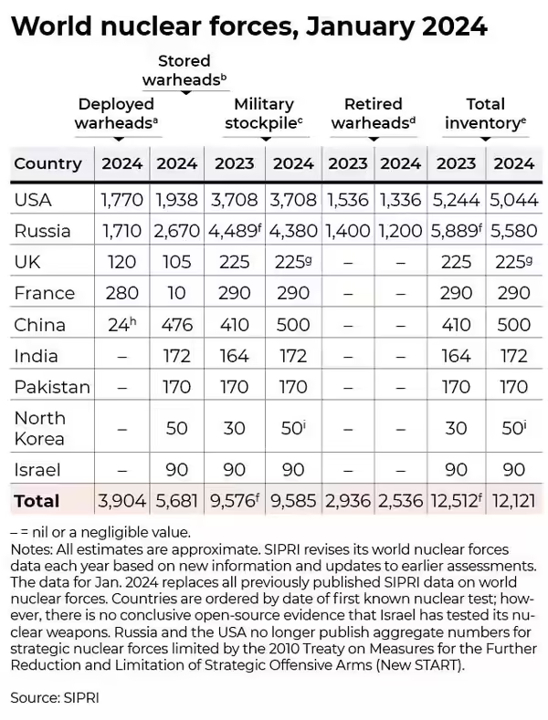
The current state of the US-China hegemonic rivalry can be summarized as follows: although China is closing the gap in many areas and has even pulled ahead in some, the United States retains a clear advantage in the two decisive domains: dollar hegemony and military hegemony. In other words, while China's emergence as a challenger to global hegemony has cost the US a significant portion of its dominant position, America remains the world's foremost hegemonic power.
That advantage, however, is deeply fragile. First, the likelihood of China voluntarily dropping out of the hegemonic contest is negligible. Unlike the Soviet Union or Japan, earlier challengers to US hegemony that each had a critical flaw in either economic or military power, China has a solid foundation in both. Second, China's ascent and America's decline are likely to continue for the foreseeable future.
3. The Trump Administration's Strategy for the US-China Hegemonic Rivalry and the Invasion of Venezuela
1) Key Points of the US National Security Strategy (NSS) Released in December 2025
On December 5, 2025, the Trump administration released a new US National Security Strategy.

The new NSS outlines the Trump administration's basic direction, but its wording is confusing at several points. This seems to come from two sources. First, rhetoric aimed at Trump's MAGA political base. Second, the administration's deeper strategic intentions.
The most confusing passages include the following:
> "The days of the United States propping up the entire world order like Atlas are over."
> "Hegemony is the wrong thing to want and it wasn't achievable."
> "After the end of the Cold War, American foreign policy elites convinced themselves that permanent American domination of the entire world was in the best interests of our country."
> "They overestimated America's ability to fund, simultaneously, a massive welfare-regulatory-administrative state alongside a massive military, diplomatic, intelligence, and foreign aid complex."
> "In sum, not only did our elites pursue a fundamentally undesirable and impossible goal ⋯"
The language on China was notably softer than before. The Biden administration's 2022 NSS had called China "America's most consequential geopolitical challenge ⋯ the only competitor with both the intent to reshape the international order and, increasingly, the economic, diplomatic, military, and technological power to do it," a frank admission of the hegemonic rivalry. The new NSS, by contrast, refers to China only through vague terms like "non-Hemispheric competitor" or "potentially hostile power."
Meanwhile, the new NSS puts top priority on "to restore American preeminence in the Western Hemisphere." This, too, is a sharp break from the Biden-era 2022 NSS, which focused on ‘decoupling advanced technology and supply chains from China’ and ‘pressure through alliances grounded in democratic values.’
How should this new NSS be read? Some see it as a turning point in US national security strategy.[5] They argue that the US has given "an official confirmation that the U.S. is no longer the global hegemon," that the new NSS "represents a dramatic reversal in the foreign policy of U.S. imperialism" and "marks the end of its attempts to defend its status as the global hegemonic power." They describe the Trump administration's policy as "a retreat from its main adversaries – China and Russia – and an attempt to plunder and dominate the weaker allies in the Western Hemisphere." In their view, Trump has accepted American decline and "the declining former hegemon sets itself more realistic goals."
But the United States has not given up its hegemonic status, nor can it. Likewise, it has not retreated from the contest with China, nor can it. Here is why.
First, US capitalism is built on dollar hegemony.
Dollar hegemony lets the United States export its economic crises to the rest of the world through effectively unlimited dollar issuance. The ability to pile up astronomical national debt is also a product of dollar hegemony.
If dollar hegemony collapsed, the US could no longer run massive fiscal deficits. That means it could no longer fund medical assistance and livelihood support (needed to keep minimum living standards) or defense spending (needed to keep military supremacy). At home, the result would be a massive economic crisis and an eruption of class struggle. Abroad, it would mean the rapid collapse of military superiority.
The collapse of dollar hegemony would effectively mean the collapse of the United States itself. The US must defend dollar hegemony at all costs. But what ultimately backs dollar hegemony today is no longer economic strength. It is overwhelming military power and the status of global hegemon (which itself rests on dollar hegemony and military supremacy). There is simply no way for the United States to defend dollar hegemony without actively defending its hegemonic position.
Second, the US and China cannot divide the world into recognized spheres of influence.
During the Cold War, the US and the Soviet Union split the world for over 40 years, each leading its own bloc: the West and the East. This worked because, amid the ruins of World War II, the two powers agreed on the division and respected each other's sphere. The Western and Eastern blocs were also thoroughly separated economically.
Today's US-China rivalry, however, plays out on top of the globalization of the 1990s onward, which wove the world economy into a single whole. Given how capitalism now works, China cannot abandon Latin America, and the US cannot abandon East Asia. Even if decoupling in advanced technologies and supply chains goes ahead, that is a completely different thing from dividing spheres of influence. Short of a catastrophe on the scale of World War II, such a partition is simply not possible.
If dividing spheres is impossible, the US and China face an inescapable, existential struggle over world hegemony. Defending global hegemony is essential for US capitalism to survive. Winning it is essential for Chinese capitalism to secure its future.
Third, the Trump administration's actions are clearly moving toward hegemonic confrontation with China.
Trump's real thinking on the US-China rivalry shows in his appointment of Elbridge Colby to the key post of Under Secretary of Defense for Policy. Colby is known for the view that "the hegemonic contest with China is America's single most important security issue." He reportedly led the drafting of the 2017-18 US National Security Strategy while serving as Deputy Assistant Secretary of Defense during Trump's first term. In his 2021 book, The Strategy of Denial: American Defense in an Age of Great Power Conflict, he argued that the US must direct its military power to deny China hegemony over Asia.
The 2026 National Defense Strategy, released on January 23, 2026, as a follow-up to the NSS, makes this even clearer. It calls China "the second most powerful country in the world—behind only the United States—and the most powerful state relative to us since the 19th century." It also signals a shift on the Korean Peninsula, stating that "South Korea is capable of taking primary responsibility for deterring North Korea with critical but more limited U.S. support," and that this shift "in the balance of responsibility is consistent with America’s interest in updating U.S. force posture on the Korean Peninsula." The message is clear: the main mission of US forces in Korea is being redirected toward containing China, allowing rapid intervention in the event of a Taiwan crisis.
Fourth, focusing on the Western Hemisphere is not about dividing spheres of influence with China on friendly terms. It is a strategy of weakening China from the most favorable ground first, before an eventual all-out confrontation. Since this directly concerns Trump's motives for invading Venezuela, let us look at it in detail.
2) What It Means to Prioritize the Western Hemisphere
From America's point of view, the Western Hemisphere means Latin America to the south and Canada and Greenland to the north. Within this strategy, it is the southern part, Latin America, that concerns the rivalry with China. (Canada and Greenland, both NATO-aligned, relate more to Russia and will be addressed later.) Let us turn to Latin America first.
Latin America, long called America's "backyard," has for generations been under US control and subject to imperialist plunder. During the 1980s and 1990s, when Washington fully unleashed the neoliberal offensive, Latin America was stripped bare by US capital through the familiar sequence of debt crises, IMF structural adjustment, market liberalization, privatization, labor deregulation, and austerity.
The extreme poverty and deepening inequality that swept the continent provoked a backlash: the "Pink Tide" that brought center-left governments to power across Latin America from the early 2000s to the mid-2010s. These "progressive" governments, led by Chávez in Venezuela, Lula in Brazil, and Kirchner in Argentina, benefited greatly from China's economic rise at the same time. China's huge imports of crude oil, raw materials, and food from Latin America gave these governments crucial economic breathing room.
In the 2010s, however, as China's growth slowed, so did the economies of Latin American countries. By the mid-to-late 2010s, the Pink Tide governments were in crisis, and far-right forces like Brazil's Bolsonaro surged forward. These Latin American far-right movements, closely tied to Trump, pushed an "intensified neoliberalism and austerity" agenda: deeper labor deregulation, more privatization, and the "criminalization of dissent." Predictably, they too provoked a popular backlash. Over the past decade, Latin American politics have swung back and forth between "progressive" governments and far-right forces, much like the United States itself.
In the meantime, China has steadily expanded its economic reach and influence across Latin America. It has become the first or second trading partner for most countries in the region. Since 2018, China has invested $16 billion in the "Lithium Triangle" (Argentina, Bolivia, Chile), which holds 68% of the world's lithium reserves, securing dozens of mining and extraction projects. Chinese state-owned enterprises have pushed into the electricity sector, now controlling over half of Chile's and Peru's power generation, while investing $32.5 billion in Brazil to supply power to 60 million people. Huawei dominates the telecommunication infrastructure market in Brazil and Mexico. China has also built the Chancay port in Peru and is pursuing a rail link to Brazil to create a Pacific-Atlantic corridor.

What, then, does it mean for the US to put its strategic priority on the Western Hemisphere? First, that Washington will no longer tolerate China's steady expansion in its own backyard. Second, that after pushing China out of Latin America as much as possible, the US intends to lock down the region's abundant resources.
Third, that it plans to achieve these economic goals not through economic competition, but through political and military means. This is a key feature of the US Western Hemisphere strategy, and it reflects a clear-eyed reading of each side's strengths and weaknesses.
With its manufacturing capacity in serious decline after decades of deindustrialization, the United States simply cannot beat China in Latin America through economic competition. Militarily, however, Latin America is China's most exposed region: Chinese military power is focused on holding off US forces in East Asia and the Western Pacific, leaving it with virtually no reach on the other side of the globe.
China's political influence in Latin America also cannot match what the US has built up over many decades. Trump in particular has been meddling in Latin American elections, building a network of pro-American far-right regimes from Milei in Argentina to Bukele in El Salvador, Noboa in Ecuador, Kast in Chile, and Asfura in Honduras.
The plan is to knock out pro-China "progressive" regimes one by one, through military force or tariff offensives, while backing pro-American far-right governments with generous rewards. From Trump's point of view, the central task of these pro-American, anti-China regimes would be to freeze or cancel economic cooperation with China and redirect access to resources and infrastructure toward American companies.
Win first on the easiest ground, then build up those gains for the decisive battle: this is the most basic principle of military strategy. The Trump administration's decision to prioritize the Western Hemisphere (Latin America) within the broader US-China hegemonic rivalry is exactly this principle in action.
3) The Intent Behind the US Invasion of Venezuela
The Chávez government (1999-2013) stood at the center of the Latin American Pink Tide. Chávez rode the wave of mass movements that grew out of the Caracazo, the 1989 anti-neoliberal uprising of the urban poor in Caracas. He won the presidency in the 1998 elections. In 2002, a US-backed military coup briefly ousted him, but massive street protests restored him to power. He also won a 2004 recall referendum.
Under the banner of "21st Century Socialism," the Chávez government nationalized key industries, especially oil and steel, and provided housing, education, and healthcare to the poor. This built a strong base of majority support. Using forceful anti-imperialist rhetoric, it kept up an openly combative stance toward US imperialism.
In practice, however, the Chávez government never tried to fundamentally transform Venezuela's dependent capitalist order. Nationalization was partial; the vast majority of enterprises stayed in private hands. Where nationalization did occur, it took the form of compensated expropriations at full market value. Foreign debt was serviced faithfully, and profit repatriation was allowed. Giant corporations were effectively exempt from taxation and given access to vast mineral wealth. The Chávez government protected the interests of both the traditional capitalist class and the rising Boliburguesía, the new capitalist class that had formed around Chavismo.
Under Chávez, power was concentrated in a single individual. The state was controlled by one party, the United Socialist Party of Venezuela (PSUV), and a loyal military. The working class and the oppressed masses were shut out of meaningful decision-making. The revolutionary left that refused to be absorbed into Chavismo faced repression and marginalization. An antidemocratic electoral law that effectively limited candidacy to the wealthy ensured the revolutionary left was silenced, while the wealthy right-wing monopolized the anti-Chávez opposition.
The Chávez government held the leftmost position among the Pink Tide's "progressive" regimes, but it carried these deep contradictions, which exploded under the Maduro government, which took over after Chávez's death in 2013.
The Maduro government came to power just as global economic crisis, and above all the slowdown of Chinese growth, sent crude oil and commodity prices crashing. Venezuela, whose economy was overwhelmingly dependent on oil, was devastated. The currency collapsed, price controls fell apart, and inflation spiraled while wages and pensions were cut. With even the most basic needs going unmet, some 7 million people (a quarter of the population) fled the country. Chronic shortages, the exodus of medical workers, crumbling infrastructure, and blackouts gutted the healthcare system. Amid all this, the Maduro government set up special economic zones and pursued privatization in the name of economic recovery, effectively gutting labor laws.
Where the Chávez government had enjoyed electoral legitimacy based on genuine majority support, the Maduro government leaned more and more on fraud. In the 2018 presidential election, major opposition candidates were barred from running. In the 2024 presidential election, evidence of systematic vote-rigging was unmistakable. Mass protests erupted nationwide, with especially large demonstrations in the working-class and low-income neighborhoods of Caracas that had once been Chávez's strongest base. The Maduro government, working with the para-police Colectivos, violently crushed the protests and arrested some 2,000 people.
In 2019, the first Trump administration imposed sweeping sanctions on Venezuela to back a coup attempt by National Assembly President Guaidó. When the Ukraine war in 2022 cut off Russian crude supplies, the Biden administration eased sanctions on Venezuela to expand the oil supply. In 2024, the Biden administration declared the Venezuelan presidential election fraudulent and recognized the opposition candidate as the winner. The second Trump administration rejected the Maduro government from day one and began preparing for invasion. On January 2-3, 2026, the operation was launched.
The Trump administration's sudden invasion of Venezuela was the concrete execution of the national security strategy prioritizing the Western Hemisphere. The intent behind the invasion can be summarized as follows.
First, to sever the China-Venezuela relationship.
China had been receiving 80% of Venezuela's crude oil exports at prices 50% below international market rates. This was essentially repayment in oil for $60 billion in loans China had extended to Venezuela. Venezuelan crude made up 6-7% of China's total oil consumption.
Since December, however, the US has been seizing oil tankers traveling the Caribbean to and from Venezuela, blocking Venezuelan crude from reaching China. By January 20, a total of seven tankers had been seized.
After Maduro's capture, Trump declared that the US would take delivery of up to 50 million barrels of Venezuelan crude ($2.8 billion worth), sell it on Venezuela's behalf, and return a portion of the proceeds. Venezuela would be required to spend those proceeds only on American goods. On January 20, the Rodríguez government (which had taken power in Venezuela) announced it had received $300 million of $500 million in oil sales proceeds as an initial installment. In short, the Rodríguez government handed control of Venezuelan oil exports to the United States, exactly as Trump demanded.
Second, to seize control of Venezuela's oil resources.
Venezuela holds the world's largest proven oil reserves (303 billion barrels). With Venezuelan oil under US control, America would command 30% of global reserves. This would be a powerful tool for keeping international oil prices low to ease inflation and for defending the petrodollar system that underpins dollar hegemony.
As the Trump administration's Secretary of State Marco Rubio said on January 4, the day after the invasion: "What we’re not going to allow is for the oil industry in Venezuela to be controlled by adversaries of the United States." For the past two decades, it was China that played the central role in keeping Venezuela's oil industry running. Chinese technicians continue to maintain and repair the country's oil infrastructure to this day. The US goal is clear: drive out the Chinese and take over Venezuela's oil industry.
Bloomberg has estimated, however, that significantly ramping up Venezuelan crude production would require "$100 billion in investment and several years." Controlling Venezuela's oil and actually developing it at scale may prove to be very different things.
Third, to reduce Venezuela down to a US subordinate state.
To reliably enforce American economic interests in Venezuela, the US aims to turn the country into a subordinate state fully under Washington's control. This is nothing new. What is new is Trump's method: rather than the "nation-building" model used in Iraq and Afghanistan (transplanting so-called "American-style democracy" to install a pro-US regime), Trump chose a different path.
Right after seizing Maduro, Trump bypassed Machado (the longtime face of the pro-US opposition) and declared he would recognize Maduro's vice president, Rodríguez, as Venezuela's ruler. The implicit threat was clear: defy me and you will suffer worse than Maduro. The reassurance was equally clear: comply, and the regime's survival is guaranteed. After some initial confusion in her messaging, Rodríguez appears to have given in completely. On January 15 (the same day Machado met Trump in Washington to present him with the Nobel Peace Prize), Rodríguez met with the CIA Director in Caracas. That same day, she delivered her first address to the National Assembly and submitted a Hydrocarbons Law amendment to reverse the nationalization of the oil industry. The bill included provisions for foreign capital investment, company autonomy in operating oil fields, and expanded profit-sharing. It was passed by the Venezuelan National Assembly on the 29th.
Trump's scheme of subjugating the existing ruling class rather than pursuing the "nation-building" he himself had criticized appears, at least so far, to be working. This is above all because Trump read Venezuela's ruling forces correctly. They are an oppressive class that reigns over workers and the masses. Show them the overwhelming power of imperialism and they will submit to preserve their own position. Once a patron-client relationship is established, they will serve as loyal enforcers of imperialist interests, repressing the population on Washington's behalf.
Fourth, to showcase US military superiority and Chinese military weakness as dramatically as possible, reinforcing American hegemonic control.
The US put on a spectacular show of military might during the invasion. By thoroughly neutralizing Chinese- and Russian-made air defense systems, it demonstrated superiority not only over Venezuela but, by implication, over China and Russia as well. This was, of course, a performance staged in Latin America, the most favorable possible ground for the US, and the impression it created was considerably overblown relative to the actual balance of forces.
But the effect has been real. Latin America's far-right regimes openly celebrated the invasion. "Progressive" governments like Lula's Brazil and Sheinbaum's Mexico retreated into timid, vague, and noncommittal responses. Through this invasion, the US has secured a beachhead from which to impose its will through political-military action and intimidation across Latin America and beyond.
4. Where Is the US-China Hegemonic Rivalry Heading?
1) Another Dimension of the US National Security Strategy: Realigning the Alliance Order
The new US National Security Strategy also reveals another key goal of the Trump administration: to pry Russia away from China and, ideally, pull it onto America's side. Trump has been courting Putin openly.
The NSS was written in language that can be read as saying "the US no longer seeks global hegemony and will focus on the Western Hemisphere while accepting a multipolar world order." This was partly a nod to the MAGA base. But it was also a deliberate echo of Putin's own "multipolar world order" slogan. The NSS did not call Russia a threat to the United States. Instead, it condemned the European Union for blocking US peacemaking efforts and accused Europe of facing "civilizational erasure." By pledging to "ending the perception, and preventing the reality, of NATO as a perpetually expanding alliance," it signaled a readiness to meet Russia's core demands.
In truth, Trump has been trying to reshape the US-China chessboard by drawing in Russia since the very start of his second term. His approach to the Ukraine war has been driven by this thinking. Putin, for his part, has officially kept up his alliance with China while seemingly rebuffing Trump's advances. Yet he has made no effort to hide his willingness to hear what price the US might offer. From Russia's point of view, becoming China's junior partner was a necessity forced by economics (especially after the Ukraine war broke out), but it has always been an awkward fit given Russia's self-image and military power.
The new NSS, then, is Trump taking his courtship of Putin a step further. The Putin government recognized this and responded positively almost at once, saying the strategy "aligns with Russia's vision for the future." Putin also accepted Trump's invitation to join the Gaza Strip "Board of Peace," despite Trump's role in the Palestinian genocide.
Trump's aggressive pursuit of Putin comes from his belief that winning Russia over could reshape the US-China rivalry entirely. If Russia sided with the US, India, which currently straddles both camps, would likely follow. The resulting coalition could squeeze an isolated China much as the West once squeezed the isolated Soviet Union into collapse.
The odds of success, however, look slim. Trump would first need to hand Putin a major concession while ending the Ukraine war, but managing the blowback from Ukraine and Europe is far from simple. As the NSS itself admits, US attempts to end the war on terms favorable to Russia have been repeatedly blocked by active Ukrainian and European resistance. Europe fears that a Russian victory in Ukraine would not stop at its borders but would encourage Russian expansion across the former Soviet space, or even the former Eastern Bloc, likely triggering further wars.
To break the deadlock, a longer, classified version of the NSS signaled that Trump would build a far-right alliance in Europe similar to the one in Latin America: "We should support parties, movements, and intellectual and cultural figures who seek sovereignty and preservation/restoration of traditional European ways of life… while remaining pro-American." But unlike Latin America's far-right regimes, which are bound to Trump in tight patron-client ties, Europe's far-right forces are neither dependent on Trump nor ideologically uniform.
Trump's own territorial designs on Greenland and Canada are making his alliance-reshuffling scheme even harder. He tried to ride the momentum of the Venezuela invasion by hinting at military action over Greenland and threatening tariffs against eight European nations. But European backlash and distress signals from financial markets forced him to retreat, at least for now.
Trump's overreach wounded European pride deeply. The far-right was no exception. European far-right forces, which had cheered Trump's electoral victory in November 2024, have been voicing criticism in unison since Trump followed up his 2025 unilateral tariffs and defense-spending pressure with the 2026 invasion of Venezuela and the Greenland annexation bid.
A telling contrast: Latin America's far right cheered the invasion of Venezuela; Europe's far right actively opposed the Greenland annexation. Unlike Latin America, Europe is not a collection of US semi-colonies but a group of rival imperialist powers, even if currently weaker. European far-right movements in particular have built their base on "sovereignism," opposing what they see as infringements on national sovereignty by the EU, the UN, and similar bodies. Opposing Trump's open assault on sovereignty is therefore a natural reflex. If Trump pushes ahead with Greenland, the rift with Europe's far right will likely widen sharply, especially in the Western European imperialist heartlands of Britain, France, Germany, Italy, and Spain.
Trump's Russia gambit had limited chances on its own; his territorial ambitions have made it far harder. If he stays on this course, the process of gaining Russia may at the same time become the process of losing Europe. From China's point of view, trading Russia for Europe as an ally might not be a bad deal at all. This very possibility, in turn, would greatly weaken Trump's reason to keep chasing the Russia card.
2) The Ultimate Resolution of the US-China Hegemonic Rivalry: Military Confrontation
Unless the alliance systems around the US and China tilt sharply to one side, leaving one power dangerously isolated, the hegemonic rivalry will ultimately be settled only through direct military confrontation. That is the lesson of World War I and World War II, and it is the most likely scenario for now, unless an international struggle of workers and oppressed masses against imperialism and war manages to prevent it.
If military confrontation comes, where will the decisive theater be? Without question, the region from East Asia to the Western Pacific. Why?
First, this is where US maritime power and Chinese continental power collide most directly. The United States leads Japan and South Korea as allies; China leads Russia and North Korea.
Second, China's strategic goal is to break US control over the Western Pacific, push American forces east, and take command of the vast stretch from its own coastal waters to the Western Pacific. This became public record in 2013, when Xi Jinping told the visiting US Secretary of State in Beijing: "The vast Pacific Ocean has room enough for two great nations, China and the United States." In effect, he was proposing to divide the Pacific. In practice, this means bringing East Asia (Japan, South Korea, Taiwan) and Southeast Asia (the Philippines, Vietnam, Indonesia, and others) under Chinese influence. The US counters by stationing over 64,000 troops in Japan and South Korea, supplying ever more weapons to Taiwan, and maintaining a large naval presence from the Western Pacific through the Taiwan Strait.

Third, East Asia, encompassing China, Japan, South Korea, and Taiwan, is the "workshop of the world." It accounts for 43% of global automobile production, 75% of semiconductor output, and 95% of shipbuilding. It holds a position that could decide the fate of world capitalism. If China drives the US out of East Asia and locks in regional hegemony, it will rise to the status of supreme global hegemon. If the US blocks China's ambitions, it will have shaken off the challenge and restored its sole hegemony.

If US-China military confrontation breaks out in East Asia and the Western Pacific, what form would it take?
First, such a war, assuming it does not escalate to nuclear annihilation, would be a conventional conflict fought with the greatest destructive power ever assembled. As of 2025, the combined military personnel of the US-Japan-South Korea alliance total about 2.05 million (1.35 million + 250,000 + 450,000), while China-Russia-North Korea field roughly 4.7 million (2 million + 1.5 million + 1.2 million). These coalitions include four of the world's five largest military powers, with heavily armed forces and industrial capacity spanning from conventional to cutting-edge weaponry.
Second, such a war would most likely be sparked by a crisis over Taiwan or the Korean Peninsula. But wherever it starts, it would rapidly engulf all of East Asia and the Western Pacific. On land, China's eastern seaboard, North Korea, the Russian Far East, Taiwan, South Korea, and Japan would all become battlefields. At sea, the theater would stretch from China's coastal waters across the breadth of the Western Pacific.
How close are we to such a confrontation? A reasonable estimate suggests, fortunately, that more than a decade remains. Both the US and China need at least roughly ten years of essential military preparation. Even once those preparations are complete, the final decision to launch a full-scale war, with its inevitable destruction and mass killing, will likely take additional time. A plausible timeline places the start of direct military confrontation some 15~20 years from now, somewhere in the 2040s.
What military preparations does each side require?
China must above all build up its nuclear arsenal to reach credible nuclear equilibrium, the threshold of mutual assured destruction (MAD), to keep any conflict conventional. China is reportedly adding about 100 nuclear warheads per year, putting its current stockpile at roughly 600 as of 2025. At this rate, it would have about 1,500 within a decade. While still well below the US total, that would approach the number of operationally deployed American warheads. Closing the aircraft carrier gap is also critical: China plans to add six carriers by 2035, bringing its fleet to nine, close to America's eleven.
The United States must above all rebuild its manufacturing base to sustain conventional warfare and its shipbuilding industry to support naval power. Since naval forces would play the central role in a Western Pacific conflict, the US-China gap in shipbuilding is a glaring American weakness. China currently accounts for 55% of global shipbuilding; the US, just 0.1%. A single Chinese shipyard can launch more tonnage in a year than the entire US has built since World War II. As of 2025, the naval vessel count stands at 370 for China versus 297 for the US, and the gap is growing. The US must also develop weapons systems that can counter China's advanced hypersonic missiles.
One might object that projecting a US-China military confrontation centered on East Asia in 15-20 years is speculative overreach. The objection that reality has too many variables for such specifics is perfectly fair; events could unfold very differently. Yet there is real value in thinking through this scenario. Even if the future does not match this projection exactly, it drives home the reality that a world-historical upheaval of broadly similar scale looms ahead. The urgent need to build a workers' and people's movement to meet it, both nationally and internationally, cannot be put off.
For those of us living in the Korean Peninsula and East Asia especially, events like the Ukraine war, the Palestinian genocide, the invasion of Venezuela, and the Greenland annexation bid must be read not as distant episodes in faraway lands, but as warning signs of a massive storm that could upend our relatively peaceful lives entirely. Whether we urgently develop the practical capacity of the working class to respond will make an enormous difference in the not-so-distant future, just as the different paths of the workers' movements in Germany and Russia during the first fifteen years of the twentieth century proved decisive when World War I finally erupted.
5. Directions for Action and Tasks Ahead
As capitalism increasingly reveals its true face as an "era of crisis, war, and revolution," building a movement of workers and oppressed masses against imperialism and war, in each country and internationally, is a matter of life and death for the working class. With that in mind, having examined "The US Invasion of Venezuela and the US-China Contest for Hegemony," let us briefly outline the directions and tasks for action going forward.
First, alongside workers and the oppressed worldwide, Korean workers must join the struggle to condemn US imperialist aggression against Venezuela. Denouncing the injustice of the invasion is, of course, self-evident. What we must stress even more is that this is not only a trial for the workers and masses of Venezuela and Latin America. It is the product of an imperialist war machine that will ultimately drag the entire world, and the Korean Peninsula and East Asia in particular, into devastating destruction and slaughter. Opposing the US invasion of Venezuela today is the starting point for halting the far more terrible war and massacre that will reach our doorstep tomorrow.
Second, the struggle and international solidarity of workers and the oppressed against the US invasion of Venezuela must be waged as an independent movement, strictly separate from reactionary bourgeois-nationalist regimes that oppress workers while waving a hollow anti-imperialist banner. The reactionary character of the Maduro regime has been, and remains, a decisive obstacle to building a genuine mass movement of Venezuelan workers and the oppressed against US imperialist aggression. Only by breaking completely with illusions about such regimes can the anti-imperialist movement advance with real consistency.
Third, the struggle against the US invasion of Venezuela must become part of a broader push to advance the global anti-imperialist, anti-war movement, and must be linked in particular to the international solidarity movement for Palestinian liberation. Over the past two years, the Palestine solidarity movement, waged worldwide against the Gaza genocide, has emerged as the focal point of the global anti-imperialist, anti-war movement. It has forged a range of struggle methods, from the moderate BDS campaign to militant street protests, occupations, and the Sumud Flotilla, and even to general strikes aimed at directly halting complicity in genocide. In doing so, it has charted the path forward for the movement as a whole. Connecting the struggle against the invasion of Venezuela with the Palestine solidarity movement will mark an important step in taking the anti-imperialist, anti-war movement to a new level.
Fourth, the anti-imperialist, anti-war movement of workers and oppressed masses, especially here in the Korean Peninsula and East Asia, must advance toward building an international movement to sever the chain leading from the US-China hegemonic rivalry to military confrontation centered on East Asia and the Western Pacific. We must demand both the withdrawal of US forces from Korea and Japan and the dismantlement of North Korea's nuclear arsenal, in order to sharply reduce military tensions on the Korean Peninsula. We must support Taiwan's peaceful self-determination, free from interference and aggression by the US and China alike, exercised not by pro-American or pro-Chinese capitalist classes, but by the power of workers and the people. And above all, while exposing and warning that the US-China hegemonic rivalry will ultimately lead to the horrors of direct military confrontation and mass slaughter, we must build a massive anti-imperialist, anti-war movement of workers and the oppressed, beginning in South Korea, Japan, the United States, China, Taiwan, North Korea, and Russia, and extending to the entire world, to oppose and halt this drive toward imperialist war.
(End)
Originally published in Korean on January 31 in March to Socialism.
[1] Park Min-hee, *Hankyoreh*, 2026/01/07, "Maduro seized after meeting Chinese special envoy... How will China respond?"
[2] In 2024, China's per capita GDP across its total population of 1.4 billion was $13,317.
[3] André Barbieri and Esteban Mercatante, 2025, "China in the Global Capitalist System."
[4] The Fed's Index of International Currency Usage is a weighted average of each currency's share across five dimensions: publicly disclosed foreign exchange reserves (25%), foreign exchange transaction volume (25%), foreign currency bond issuance (25%), cross-border bank claims (12.5%), and cross-border bank liabilities (12.5%).
[5] Michael Pröbsting, 2025/12/11, "An Official Confirmation that the US Is No Longer the Global Hegemon"


- “우리는 현대중공업의 배를 만든다. 그러므로 HD현대중공업 경영진에게 요…
- [번역] 프랑스 고등학생 봉기가 마크롱의 임기 말을 뒤흔든다
- [번역] 프랑스 고교생 봉기, 청년들의 노란조끼 운동인가?
- “우리는 언제나 일강 노동자를 위해 함께 목소리를 내겠습니다” - HD현…
- [번역] 프랑스: 고등학생·공공부문 노조·소방관들이 학교 봉쇄 투쟁으로 …
- “제가 겪었던 일을 다른 이주노동자들은 겪지 않았으면 좋겠습니다”
- ‘러스트’ 자본주의 체제가 낳은 독일 극우의 부상
- 어용노조 세워 민주노조 파괴에 나선 워릭·덕스 자본에 맞선 노동자의 연대…
- [기고] 경계를 넘어 - 2026 청년학생 순회투쟁 후기
- 2026년 전국이주노동자대회 천 명의 함성, “이주노동자의 권리, 투쟁으…
- 7월 5일 전국이주노동자 공동행동대회: 이주노동자들이 노동조합 가입을 선…
- 6월 26일 HD현대중공업 이주노동자 투쟁문화제, 이주노동자들의 함성과 …
- [리포트] 300명 넘는 현대중공업 이주노동자들이 한 자리에 모이다
- "나쁜 계약 철회하라!" HD현대중공업 이주노동자들이 일어서다
- [후기] 의사소통도 어렵고 가족도 지역 기반도 없지만, 민주노조의 길이 …
- [후기] SK하이닉스·한화에어로스페이스 중대재해, 이윤 위해 생명안전을 …
- [후기] 진짜 사장 서울시와 국가를 앉히는 돌봄 노동자 투쟁을 위해
- [후기] 현대차 진짜 사장 당장 나와! - 5월 28일 원청교섭 불응 현…
- [우리의 투쟁] 이스라엘의 가자지구 가스전 개발사업에 참여하는 한국석유공…
- [발언] 노동절, 우리는 끓어오르는 분노를 안고 이 자리에 섰습니다